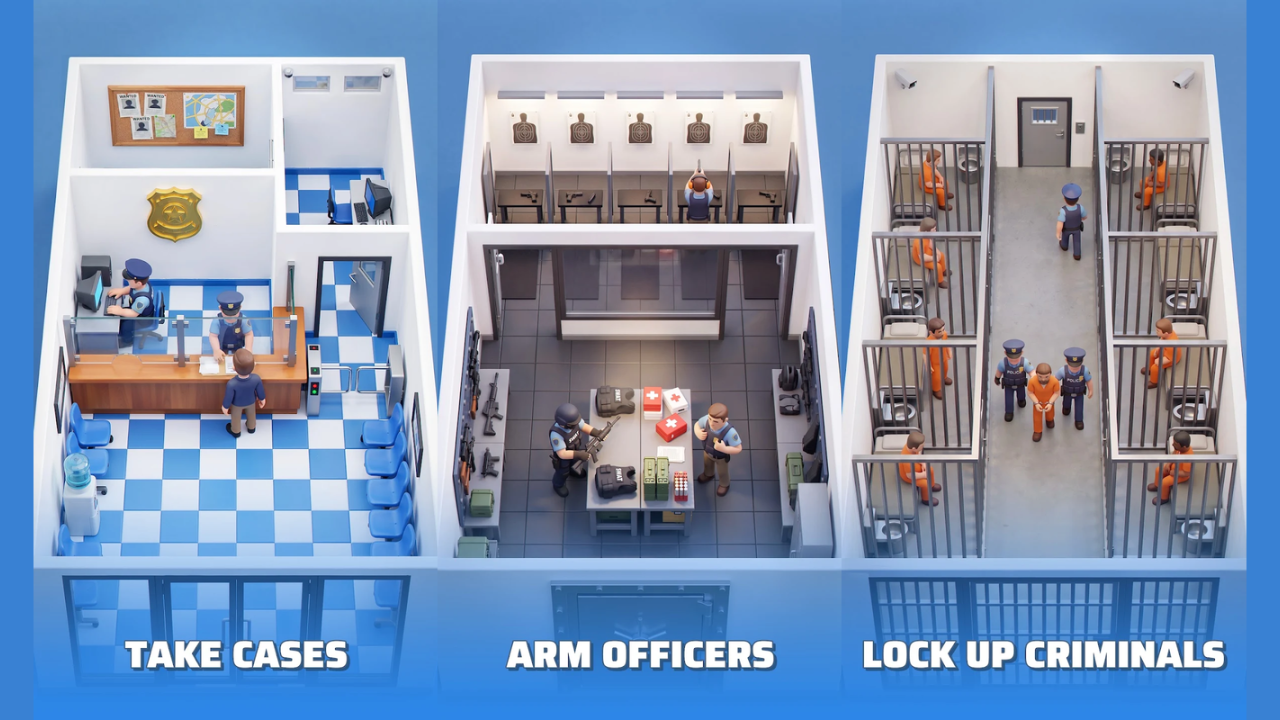
It's finally here! Your Police Chief account will be filled with FREE Diamonds and Money and more!
The Currency Conundrum: Diamonds vs. Cash
At its core, Police Chief operates on a dual-currency system: Diamonds (Gems) and Cash (Dollars). Diamonds are the premium currency—scarce, powerful, and often the key to bypassing grind-heavy progression. Cash, on the other hand, is the bread-and-butter currency, earned through missions, arrests, and precinct upgrades. The balance between the two is where the game’s economy gets interesting.
Diamonds are primarily used for:
Instant upgrades (skipping timers on building repairs, vehicle upgrades, or officer training).
Buying high-tier equipment (better guns, armor, or forensic tools that give you an edge in tough cases).
Unlocking special missions (some high-stakes operations require a Diamond fee to access).
Expanding your precinct (adding more cells, interrogation rooms, or evidence lockers).
Daily login bonuses (some rewards are Diamond-exclusive, making daily play a must).
Cash, meanwhile, is your day-to-day lifeline. You’ll earn it from:
Patrol missions (basic but steady income).
Arresting criminals (higher payouts for repeat offenders or high-profile cases).
Selling seized contraband (drugs, stolen goods, or illegal weapons).
Precinct upgrades (cheaper than Diamonds but take time).
Side gigs (like bounty hunting or undercover operations).
The friction between the two currencies is intentional. The game wants you to feel the weight of your choices—do you grind for Cash to slowly build your precinct, or do you splurge on Diamonds to accelerate progress? It’s a classic mobile game trap, but Police Chief executes it with enough depth to keep it engaging rather than exploitative.
The Diamond Dilemma: When to Spend and When to Save
One of the first things you’ll notice in Police Chief is how aggressively the game nudges you toward spending Diamonds. Missions take time to complete. Upgrades require waiting. And if you’re not careful, you’ll find yourself staring at a "12-hour timer" with no Diamonds to skip it. This is where the psychological hooks of the game really kick in.
Early Game: The Grind is Real
In the beginning, Diamonds are scarce. You’ll earn a handful from tutorials and daily rewards, but most of your progress will come from grinding Cash. This is by design—it forces you to learn the game’s mechanics before throwing premium currency at problems. However, it’s also where players often make their first mistake: spending Diamonds too early on upgrades that don’t matter.
For example, early on, you might be tempted to buy a faster police car with Diamonds. But unless you’re constantly failing missions due to slow travel time, it’s often better to save those Diamonds for later. Instead, focus on:
Unlocking new patrol zones (they give better Cash rewards).
Training your officers (even basic upgrades make missions easier).
Expanding your evidence storage (so you don’t have to sell loot at a loss).
Mid-Game: The Upgrade Treadmill
As you progress, the game starts throwing bigger challenges at you—gang wars, corrupt officials, and high-profile criminals. This is where Diamonds become more valuable, but also where the game’s monetization ramps up. You’ll see offers like:
"Skip this 24-hour upgrade for 50 Diamonds!"
"Unlock this elite task force for 100 Diamonds!"
"Buy this rare weapon blueprint for 75 Diamonds!"
The key here is prioritization. Not all upgrades are created equal. Some give long-term benefits (like better forensic tools that increase arrest payouts), while others are situational (like a temporary buff for a specific mission). My advice? Only spend Diamonds on things that directly improve your income or mission success rate. Avoid "vanity" purchases—like flashy police cars or custom uniforms—unless you’re swimming in Diamonds.
Late Game: The Endgame Grind
By the time you reach the late stages of Police Chief, you’ll have a fully upgraded precinct, a team of elite officers, and a reputation for taking down the toughest criminals. But the game doesn’t let up—it just gets harder. This is where Diamonds become almost essential for progression. Some endgame missions have time-limited rewards, meaning if you don’t complete them fast enough, you miss out on massive Cash payouts. Others require special equipment that can only be bought with Diamonds.
At this stage, the game’s monetization is at its peak. You’ll see ads for "Diamond bundles" promising huge discounts, and the temptation to spend is real. But here’s the thing: Police Chief is designed to be beatable without spending a dime. It just takes patience. If you’re not willing to grind, then yes, Diamonds will make your life easier. But if you’re strategic, you can still progress without breaking the bank.
Cash Flow: How to Maximize Your Earnings
While Diamonds are the flashy currency, Cash is the backbone of your precinct. Without it, you can’t upgrade, hire better officers, or take on lucrative missions. So how do you actually make money in Police Chief without feeling like you’re stuck in a pay-to-win spiral?
1. Focus on High-Reward Missions
Not all missions are created equal. Some give pennies, while others net you hundreds of Cash. Early on, stick to:
Drug busts (high payout, but require good gear).
Armed robbery responses (dangerous but profitable).
Kidnapping cases (time-consuming but high reward).
As you level up, look for missions with bonus objectives—like arresting multiple criminals in one go or recovering stolen goods. These often have multipliers that can turn a modest mission into a Cash cow.
2. Upgrade Your Precinct Strategically
Your precinct is your money-making hub. The better your facilities, the more Cash you’ll generate. Key upgrades to prioritize:
Evidence storage (so you can hold onto loot longer before selling).
Interrogation rooms (better confessions = higher arrest payouts).
Armory (better weapons = more successful arrests).
Dispatch center (faster mission assignments = more opportunities).
Avoid upgrading everything at once. Instead, focus on one area at a time and track how it impacts your income. For example, upgrading your armory might let you take on more high-risk missions, which in turn increases your Cash flow.
3. Sell Smart, Not Hard
One of the easiest ways to make Cash is by selling seized items—but not all items are worth the same. Here’s a quick breakdown of what to prioritize:
Drugs (high value, but selling too many can trigger police attention—balance is key).
Stolen electronics (consistent mid-tier payouts).
Weapons (good for one-time big earns, but risky if you get caught).
Counterfeit goods (steady income, but low per-unit value).
Avoid selling illegal items (like human trafficking evidence) unless you’re in a safe precinct upgrade. The last thing you want is a precinct raid that wipes out your earnings.
4. Hire the Right Officers
Your officers aren’t just for show—they directly impact your Cash flow. Each officer has:
A specialty (forensics, combat, interrogation).
A salary cost (higher-tier officers cost more but perform better).
A morale system (happy officers work faster and make fewer mistakes).
Early on, focus on cheap, efficient officers—like a basic detective for interrogations or a patrol officer for quick missions. As you earn more Cash, invest in specialists who can handle high-tier cases. And always keep morale high—unhappy officers slow down missions and can even quit, costing you both Cash and progress.
5. The Power of Passive Income
Police Chief has a few passive income streams that many players overlook:
Precinct upgrades (some generate Cash over time, like a "Crime Lab" that slowly processes evidence).
Daily login bonuses (even small amounts add up).
Side gigs (like bounty hunting or undercover work, which run in the background).
If you’re not actively playing, check in every few hours to collect passive rewards. It’s not a fortune, but it’s free Cash that adds up over time.